When most people think about tattoos, they picture the finished artwork on the surface of the skin. What’s far more interesting is what’s happening underneath that surface for the rest of your life. A tattoo isn’t just ink sitting in skin—it’s a long-term interaction between pigment particles and your immune system inside a living, changing organ.
Studios such as Raleigh Tattoo Company (https://raleightattoocompany.com/) and Monochrome Tattoo Studio (https://monochrometattoostudio.com/) often explain tattooing in practical terms to clients, but the underlying science is what really determines why tattoos last, fade, and evolve over time.
Where tattoo ink actually goes inside the skin
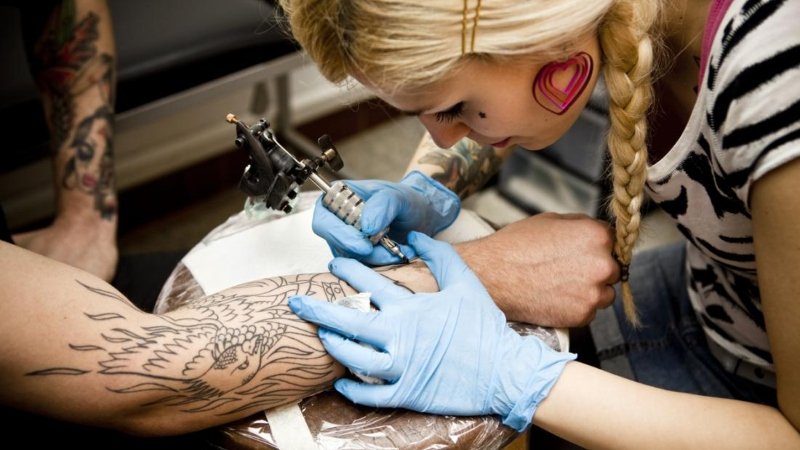
The skin has multiple layers, but tattoos only work because ink is placed into the dermis, which sits beneath the outer epidermis. The epidermis is constantly renewing itself and shedding cells, which is why anything placed only on the surface disappears quickly. The dermis is more stable and contains collagen, blood vessels, and nerve endings. When a tattoo machine inserts ink, it creates thousands of tiny controlled punctures per minute, depositing pigment directly into this layer. Once there, the ink becomes physically trapped in a dense network of skin tissue.
University-level dermatology research, including material from Harvard Medical School’s dermatology and skin biology resources, explains that tattoo ink remains in the dermis because it becomes encapsulated within skin structures and immune cells rather than being free-floating (https://hms.harvard.edu/diseases-and-conditions/tattoos-skin).
Why your immune system never fully removes a tattoo
As soon as ink enters the dermis, your immune system responds. The body recognizes tattoo pigment as foreign material and sends immune cells called macrophages to break it down. These cells engulf ink particles, but tattoo pigments are chemically stable and physically too large to fully digest. Instead, the pigment remains trapped inside these immune cells. Over time, when those cells die, the pigment is released and taken up again by new macrophages.
This creates a continuous cycle of containment rather than removal. Research from the University of British Columbia’s dermatology and skin biology studies describes this process as a long-term immune “holding pattern” where pigment persists because it cannot be fully cleared from the dermis (https://dermatology.ubc.ca/research/tattoos-and-skin). This is the core reason tattoos are permanent in a biological sense.
Why tattoos fade instead of disappearing
Even though tattoos are stable, they are not completely static. Over years and decades, small amounts of pigment are gradually removed through immune activity. At the same time, UV radiation from sunlight breaks down ink particles at a molecular level. Skin itself also changes. Collagen levels decrease with age, and the dermis becomes thinner and less elastic. These structural changes alter how light reflects off the tattoo, which is why older tattoos often look softer even if most of the ink is still present.
Academic dermatology research from institutions such as Stanford University’s skin and immune research programs explains that tattoo fading is driven by a combination of immune turnover, photodegradation, and structural changes in skin tissue (https://med.stanford.edu/dermatology/research.html).
Why black ink behaves differently than color ink
Black ink is typically made from carbon-based pigments, which are chemically stable and resistant to breakdown. This is why black and grey tattoos tend to remain visually strong over long periods. Color pigments, however, vary widely in composition. Some are more stable, while others are more sensitive to UV light and immune processing. This leads to uneven fading across different colors over time.
University-based material science research in pigment stability, such as studies from MIT’s materials science department on nanoparticle and pigment behavior, shows that particle size and chemical structure directly influence how long pigments remain stable in biological environments (https://dmse.mit.edu/research/biomaterials).
Why depth control is one of the most important technical factors
Tattoo ink must be placed precisely within the dermis. If it is too shallow, it will be pushed out during skin healing as the epidermis sheds. If it is too deep, ink spreads into surrounding tissue, causing blurred lines or “blowout.” This is not just an artistic issue—it is a biological precision problem. The dermis has a narrow optimal zone for ink retention, and even small variations in depth can significantly affect long-term appearance.
This is why experienced artists matter so much. Studios like https://raleightattoocompany.com/ and https://monochrometattoostudio.com/ rely on controlled technique to ensure ink is placed consistently within the correct skin layer.
Healing is part of the final tattoo result
The tattoo machine stops working in minutes or hours, but the biological process continues for weeks. After tattooing, the skin immediately begins repairing itself. The epidermis closes over the tattooed area, while the dermis stabilizes around the ink particles. During this time, immune activity is still high, and small adjustments in pigment distribution can occur. This is why the healing phase is critical to the final appearance.
Medical guidance from the Mayo Clinic confirms that proper wound care during healing reduces infection risk and supports stable skin recovery after tattooing (https://www.mayoclinic.org/healthy-lifestyle/adult-health/in-depth/tattoos-and-piercings/art-20045067).
Why tattoos change over time instead of staying static
Even after healing, tattoos continue to change slowly due to ongoing biological processes. The immune system continues to interact with pigment, UV exposure gradually breaks down ink particles, and skin structure changes with age. University dermatology research from Johns Hopkins Medicine highlights that long-term tattoo appearance is influenced by environmental exposure, immune activity, and natural skin aging processes (https://www.hopkinsmedicine.org/health/conditions-and-diseases/tattoos-and-skin).
This is why tattoos soften rather than vanish—they are always in a state of slow biological adjustment.
Final perspective
A tattoo is not just a design placed under the skin. It is a long-term biological system where pigment, immune cells, and skin structure interact continuously. Its permanence is not because the ink is static, but because your body is constantly managing it without fully removing it.
When applied correctly by skilled artists such as those at Raleigh Tattoo Company (https://raleightattoocompany.com/) and Monochrome Tattoo Studio (https://monochrometattoostudio.com/), a tattoo is essentially engineered to live inside this system for decades, changing slowly but remaining recognizable throughout your life. Contact Us