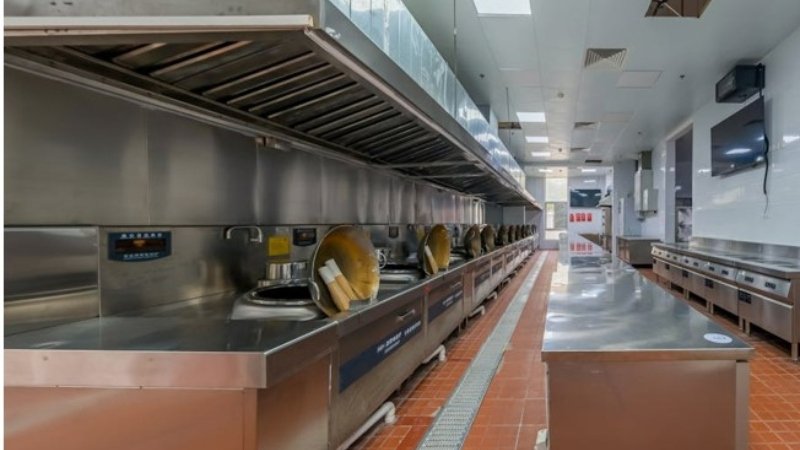
In a bustling commercial kitchen, floors get a workout most people don’t even think about. Chefs dart between stoves, waitstaff rush orders, and trolleys trundle ingredients across the prep area. That’s why in these areas, flooring is considered the backbone of safe, efficient operations. As you may have guessed, it’s where epoxy and vinyl are common choices.
The thing is, some floors hold up to the daily grind while others start showing cracks under pressure. Strength often only becomes obvious when the kitchen’s at full pace. So, what do you choose, commercial kitchen epoxy flooring or vinyl flooring?
Getting Technical Without the Headache: Epoxy Basics
Epoxy flooring is like the tough nut in the kitchen world. At its core, it’s resin bonding with concrete to create a dense, impact-resistant surface. It’s all in the chemical bonds and tensile strength, spreading weight and absorbing shocks, without easily losing its shape.
Epoxy also has the bonus of being easy to clean and offering slip resistance, which keeps busy kitchens safer. It’s technical, yes, but not complicated. We’re talking about a level of durability you can see and feel underfoot.
Vinyl Flooring in the Spotlight
Vinyl floors are softer underfoot, flexible, and install a bit quicker than epoxy. Visually, they can look just as neat, which is handy in a space that needs to look tidy during inspections. Vinyl handles daily foot traffic and spills reasonably well, even in hot kitchen environments.
Staff appreciate the comfort when standing for hours, and patch repairs are simpler if something goes wrong. That said, heavy trolleys and constant equipment movement can take a toll faster than epoxy, leading to dents or marks that show sooner.
Stress-Test: How Floors Handle Everyday Kitchen Chaos
When the Commercial Kitchens in full swing, floors are under constant assault. Epoxy spreads weight and absorbs impact, resisting stains and surface damage, while vinyl may start to show its age with dents or scratches. Typical stress points include:
- Forklifts, pallet trolleys, and heavy equipment rolling repeatedly
- Dropped pots, pans, and utensils causing impact marks
- Hot spills, grease, and acids from cleaning products
- High-volume foot traffic across prep and serving areas
Seeing it in action makes a difference. A properly installed epoxy floor keeps its form, while vinyl can sometimes struggle in the busiest spots. Staff move faster, managers worry less, and the Commercial Kitchens keeps rolling without tripping over its own flooring.
Installation Isn’t Just a Tick-Box
The best epoxy or vinyl won’t perform if installation cuts corners. Epoxy demands thorough concrete prep, including levelling, cleaning, and moisture checks. All are crucial before laying the resin. Timing, mixing, and application technique matter just as much.
Vinyl relies on smooth subfloors and good adhesives to stay put. A shoddy job might save time upfront, but it’s the kind of thing that comes back to bite when the Commercial Kitchens in full swing. Proper installation is the difference between a floor that lasts and one that’s constantly needing patch-ups.
Maintenance Matters: Daily Care and Longevity
Once installed, floors need a little love to keep shining. Epoxy resists stains, chemicals, and hot spills, making deep cleans straightforward and reducing downtime. Vinyl is easier to mop and patch, but heavy zones might require more frequent replacement. Here’s a simple comparison:
- Epoxy – Long-term durability, chemical resistance, easy deep cleans
- Vinyl – Softer underfoot, simpler patch repairs, shorter replacement cycles
- Both – Need routine inspections to prevent slips or hazards
Epoxy vs. Vinyl: Making the Right Choice for Your Kitchen
Choosing between epoxy and vinyl comes down to weighing priorities. Epoxy stands up to heavy equipment, repeated traffic, and chemical exposure over years. On the other hand, vinyl offers comfort underfoot, easier repairs, and quicker installation, suiting lighter traffic or tighter budgets. Think of it as a trade-off between long-term resilience and immediate practicality. Both work, but knowing what your kitchen demands will make the choice obvious. Contact Us
Commercial kitchens aren’t forgiving places. Heat, spills, heavy trolleys, and endless foot traffic test every surface. Epoxy floors quietly prove their worth over time, carrying the weight and keeping staff safer, all while making operations run smoother. Vinyl has its place, but if durability and low maintenance are priorities, epoxy often comes out ahead.