In modern Australian Makerspaces and STEM labs, the laser cutter has become as essential as the 3D printer. It bridges the gap between digital design and physical manufacturing. However, when schools apply for grants or budget for new equipment, the big question arises: CO₂ laser cutter or Fibre?
Both technologies are powerful, but they serve very different purposes. Choosing the right one depends on your school’s curriculum, year levels, and safety requirements.
1. The CO₂ Laser: The Versatile All-Rounder
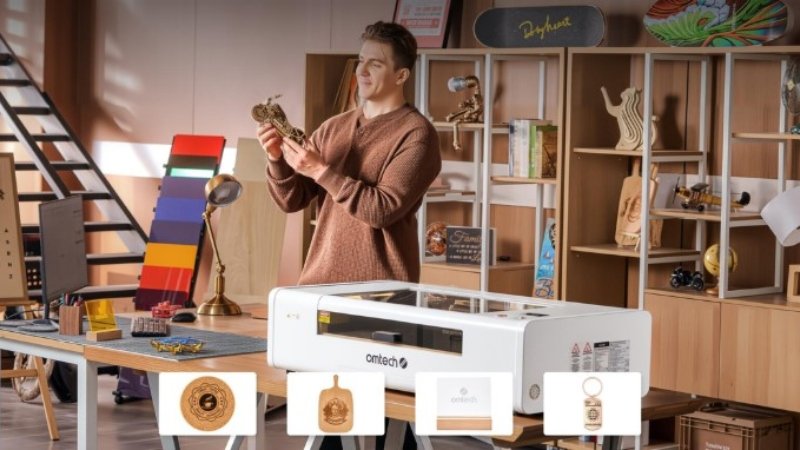
The CO₂ vs. Fibre laser is the most common choice for Australian primary and secondary schools. It uses a gas-filled tube to produce a beam of light that is absorbed perfectly by organic materials.
- Best for: Cutting and engraving timber, acrylic (Perspex), leather, paper, fabric, and some plastics.
- Why Australian Schools Love It:
- Versatility: It covers 90% of typical student projects, from architectural models for Design and Technology to creative arts projects.
- Affordability: CO₂ machines are significantly more budget-friendly than fibre systems, making them ideal for schools with limited funding.
- Ease of Use: Software like LightBurn makes it simple for students to understand the relationship between speed, power, and material density.
- Limitations: It cannot cut metal and can only mark metal surfaces if a specialised spray is applied first.
2. The Fibre Laser: The Industrial Specialist
Fibre lasers use a solid-state laser source. Their shorter wavelength is designed specifically for interacting with metals and engineered plastics.
- Best for: High-speed engraving and marking of metals (stainless steel, aluminium, brass) and dark plastics.
- Why Schools (Mostly TAFEs) Choose It:
- VET & Trade Readiness: For TAFE colleges or secondary schools with strong Vocational Education programmes (Metalwork/Engineering), a fibre laser provides industry-standard experience.
- Low Maintenance: Fibre sources can last up to 100,000 hours and require almost no maintenance compared to CO₂ vs. Fibre tubes.
- Precision: Ideal for creating permanent asset tags for school equipment, custom jewellery, or high-detail metal plates.
- Limitations: It cannot cut or engrave timber or clear acrylic—the beam passes straight through these materials without effect.
Direct Comparison: CO₂ vs. Fibre
| Feature | CO₂ Laser | Fibre Laser |
| Primary Use | Arts, Crafts, Model Building | Industrial Marking, Metalwork |
| Common Materials | Timber, Acrylic, Leather, Card | Steel, Aluminium, Brass, Stone |
| Cutting Ability | Excellent (up to 20mm timber) | Limited (unless high-wattage) |
| Maintenance | Higher (Mirror alignment, water) | Very Low |
| Price Point | Entry-level to Mid-range | Mid-range to High-end |
3. Safety First: The Australian Standard
Safety is the primary concern for Australian OHS (Occupational Health and Safety) compliance in schools.
- CO₂ Lasers: Most school models (like the OMTech Polar) are “Class 1” fully enclosed systems. If the lid is opened, the laser stops instantly. This is the safest option for a standard classroom.
- Fibre Lasers: Many fibre lasers (Galvo style) are “Open Frame.” These require a dedicated room, strict interlocks, and specialised safety goggles for every person in the room. For schools, we always recommend the Enclosed Cabinet versions.
Which One Should Your School Buy?
Choose a CO₂ Laser (e.g., OMTech Polar or MF Series) if:
- You are a K-12 school or a high school focused on Design & Technology.
- Your students are making models, signage, or creative gifts.
- You want the best “bang for your buck” to support the widest range of projects.
Choose a Fibre Laser (e.g., OMTech Mopa or Fiber Marker) if:
- You are a TAFE or a senior secondary school with a dedicated Engineering/Metalwork stream.
- The focus is on industrial marking, tool identification, or jewellery making.
- You already have a CO₂ laser and want to expand your lab’s capabilities.
For most Australian schools, the CO₂ vs. Fibre laser is the superior first investment. It offers the most creative freedom across the curriculum. The fibre laser is a fantastic secondary addition for advanced technical training.
Need help with a grant application or a quote for your school board?
Our Australian-based experts can help you select the model that fits your curriculum and safety standards.